If You Give Black Panther a Bad Review Your Racist
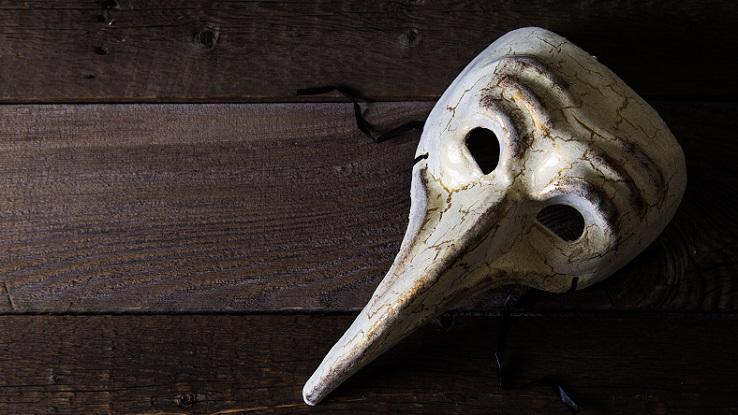
In October of 1347, a fleet of trade ships descended on Sicily, Italy. They came bearing many coveted goods, but they too brought rats, fleas and humans who were unknowingly infected with the extremely contagious and deadly bubonic plague.
The affliction that eventually became known as the Black Decease — victims' flesh and skin died and turned black — spread like wildfire beyond Europe, somewhen challenge the lives of a third of the population in just a few short years. This tragedy had a huge affect on life then and now. Have a look at some of the strange consequences that show how bad the Black Death really was.
England Moved Abroad from Catholicism
So many Catholic clergymen died equally a result of the Blackness Expiry (also known as the Black Plague and the Nifty Plague) that the entire structure of the religion in England was threatened. Historians believe there was an especially big expiry cost amongst this grouping considering priests administered terminal rites to the dying so lived together in monasteries where germs easily spread from person to person.

The widespread death of holy men as well acquired people to question their religion. The Cosmic Church only presented the Bible in Latin at the time. British Bible scholars effectually that fourth dimension were translating the Bible into English, the language of the common people, but it wasn't complete. Between a lack of priests and the unanswered questions, the Catholic Church declined in popularity in England subsequently the Black Plague.
People Crush Themselves in City Squares
The Flagellants comprised a pseudo-religious movement that sprang up from the Black Death. Many people believed the plague was God'south fashion of punishing flesh for being sinful. The Flagellants punished themselves mercilessly in hopes of making upwardly for the general customs'due south sins.
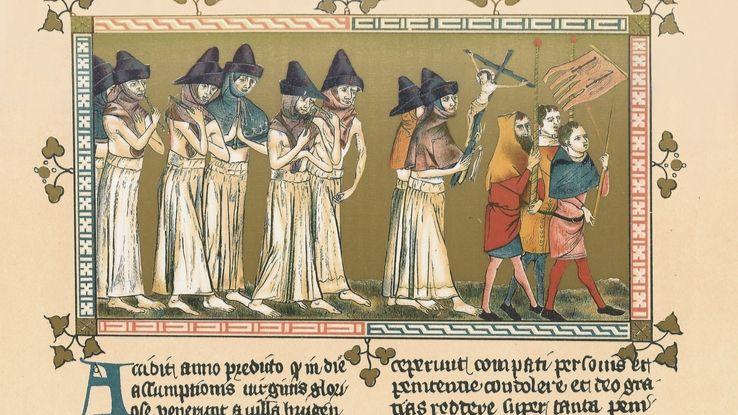
They were rich men who traveled from city to city, found the most public area possible and so flogged themselves. They shell themselves bloody with leather straps that were somewhere between a huge belt and a whip. Each of the flogging instruments too had bits of metal fastened to make the self-imposed punishment extra painful.
Some Employees Became Prisoners
Then many people died because of the Black Plague that common workers were in extreme demand. Correct before the disease started to spread, more people were moving to towns and villages to pursue new job opportunities that didn't exist when most people simply endemic their own farms.
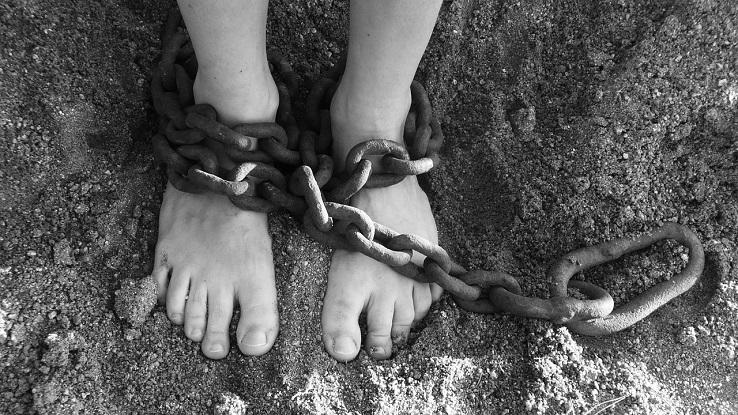
The chore market was and then great that employees sometimes abruptly quit jobs for other jobs that paid more — much every bit they would today. With the workforce so macerated, harsh laws were put in place to forbid this exercise, and it became legally acceptable for business owners to concord employees in stocks and makeshift jail cells at night to keep them from leaving for other jobs.
Travel Was Extremely Restricted
The Black Decease often spread to new cities by travelers who were unknowingly infected. A new person would arrive in town and so die a few days later. Within a few weeks, the town would be fighting a full-blown epidemic. It took time, but many historians credit the plague with leading humans to implement the concept of quarantine.

In the 1370s, some of the same Italian cities that had been hit difficult by the Black Death years earlier started to run across signs of another epidemic. They passed a constabulary that placed travelers in quarantine for thirty days or more to make certain they were not infected before interacting with locals. Sometimes ships would sail into ports with the bulk of the crew already dead. Talk near a ghost ship!
Merchandise Was Banned
Obviously, the Black Death put a serious damper on business. Just before the tragedy, technological advances and urbanization were happening at a rapid rate. Trade was rightly blamed for part of the reason the disease spread so speedily, so towns, governments and the clergy started to restrict trade.
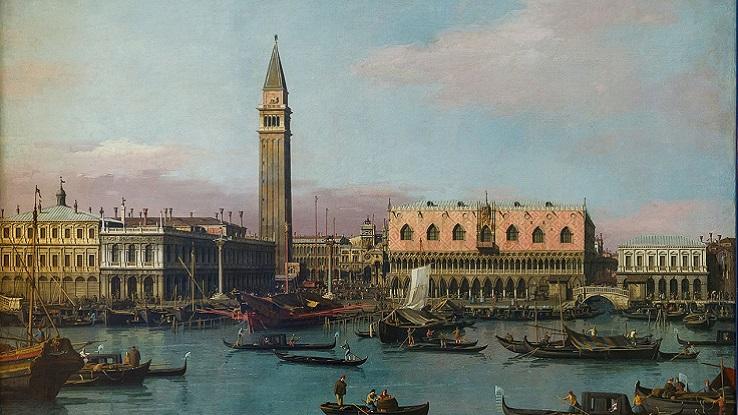
Some Italian ports shut downwards altogether. Others allowed ships to dock, merely everyone on the ship had to stay on board for 30 days before they were allowed to become into town. Trade came to a screeching halt in some areas due to bans on imported items implemented by the clergy and local governments.
System of Modern Employment Was Born
Earlier the Black Death, lodge was divided into the wealthy and the poor. The economy in much of Europe, especially England, was based on a feudal organisation where landowners were lords and workers were serfs. The serfs lived and worked on the country, they had very few personal rights and they stayed in perpetual debt to the landowners.

Because so many workers died, very few landowners had plenty serfs to remain solvent subsequently the plague. Additionally, former serfs with skills began to piece of work for themselves and received wages, rather than food or land, for their work. The same organization of employment by pick is withal in place today.
Population Growth Was Stunted for Virtually 200 Years
The Black Plague only raged at its worst for ii or three years, simply so many people died in that curt time span that it took decades for the European population to go back to pre-plague numbers. Although babies connected to be born, the population was still lower than it was before.

Information technology took 6 generations for Europe'south population to render to where it was before the autumn of 1347. Because the significantly shorter lifespans in Medieval Europe, you could think of a generation as lasting virtually thirty years. Do the math, and it took 180 years to supervene upon the number of people who died in the plague with new citizens.
No More Sticking to the Status Quo
The Black Plague is largely seen equally a negative event, of course, just the clouds had a bit of a silverish lining for those who survived. And so many mutual laborers died that the ones who were left alive had more bargaining ability when information technology came to their wages. People simply refused to work unless they were compensated fairly.
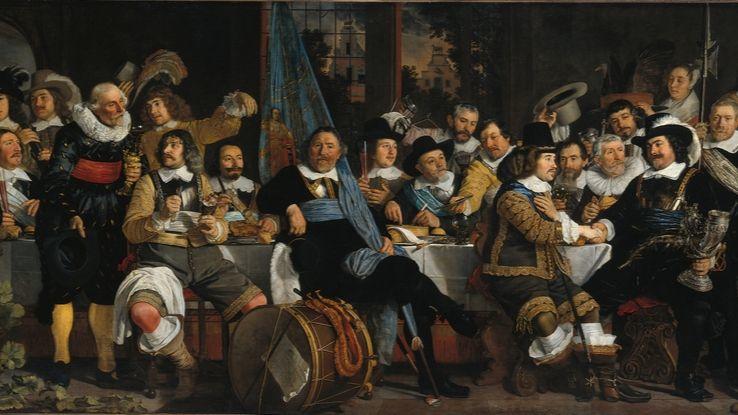
The wealthy were very much affected by the plague, every bit their income was closely tied to international trade and the land beingness worked by laborers. Common people got a huge economic boost considering they could all of a sudden earn higher wages. People who began their lives doomed to ever be at the bottom of the totem pole suddenly had the chance to make a name for themselves.
Things Got Pretty Spooky
Death may be a office of life, merely it's still pretty unnatural for people to come across dead bodies on a regular footing. During the Black Death, there were mass open graves everywhere. This took a huge mental toll on survivors, and many creative types responded by incorporating death into their writing and artwork. Medieval literature became very morbid.
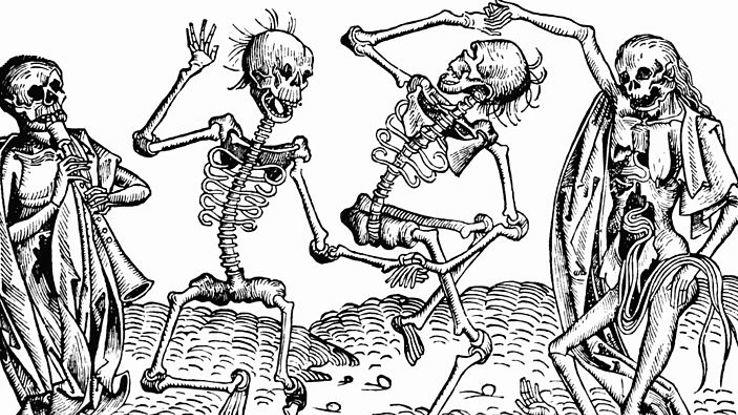
After the plague, at that place was a marked shift in thinking and creativity toward expiry and the afterlife. Dance of Death is a famous drawing from that time that shows skeletons dancing effectually. People began to wonder virtually the immortality of the soul, and skeletons became a pop culture symbol.
Anti-Semitism Received a Heave
It'due south a sad fact that humans tend to wait for someone to blame when tragedy strikes. Many people blamed God for the Black Plague, but others blamed Jewish people. After the plague, Jews became the object of hatred all across Europe. In some areas, they were fifty-fifty persecuted.

Why were the Jews targeted? Judaism includes several hygiene standards that helped protect the Jewish population from the plague. Additionally, many Jewish communities lived separately from the rest of the population. Because Jews didn't die as oft from the plague, it was easy for panicked people to believe they had caused it. Mainz, Aragon and Barcelona are just a few of the cities where townspeople viciously blamed and murdered all the Jewish people.
Doctors Virtually Became Extinct
Doctors died from the Black Expiry more often than the rest of the population. Doctors were on the front lines of the fight against the mortiferous disease, so many of them were the start ones to dice. Although some doctors practiced based on a limited cognition of anatomy, many so-called doctors treated patients with remedies that had no medical basis.
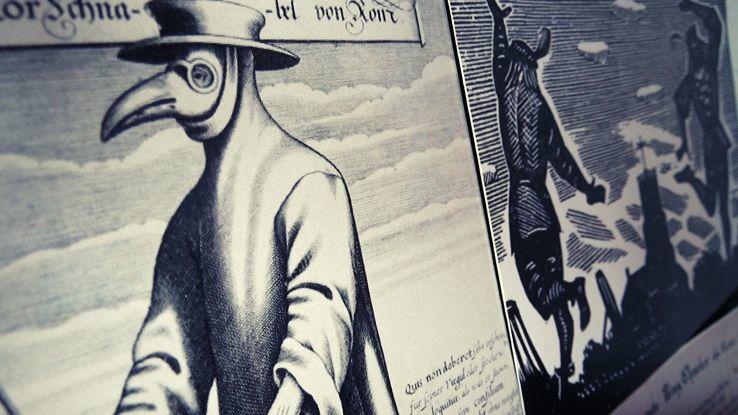
Doctors had more than exposure to the disease than the rest of the population, then you can imagine how often the ones died who believed they were treating the plague using "medicines" that were totally ineffective. The fledgling medical industry was still archaic at this betoken, and it was made worse when the little knowledge that existed died along with and then many doctors.
The Black Death Struck More than Than Once
The Blackness Decease was so horrible that many people don't realize it wasn't the merely bubonic plague epidemic. This fourth dimension period wasn't the first fourth dimension humans had been infected by this painful, deadly illness. In previous years, outbreaks had occurred in People's republic of china, Mongolia and even parts of Europe.
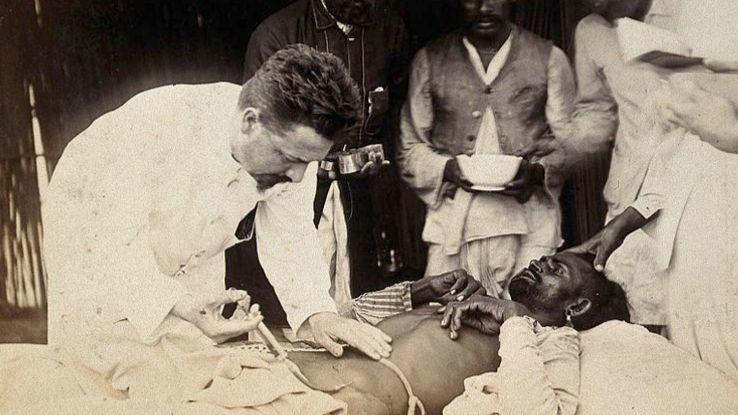
There take also been major outbreaks of the bubonic plague since the Middle Ages, even in modern terms. Fortunately, all the other outbreaks were contained to smaller geographical areas and had much smaller death tolls, so they pale in comparison to the catastrophic Black Death. This photo shows survivors of another plague epidemic in a makeshift hospital.
All Social Classes Took a Hit
Many of the diseases that affected people in the 1300s were far more than deadly for the poor than they were for the rich. The reasons were simple. Poor people ofttimes lived in overcrowded and dirty urban centers where disease could spread easily, while the rich usually lived on less crowded rural estates.
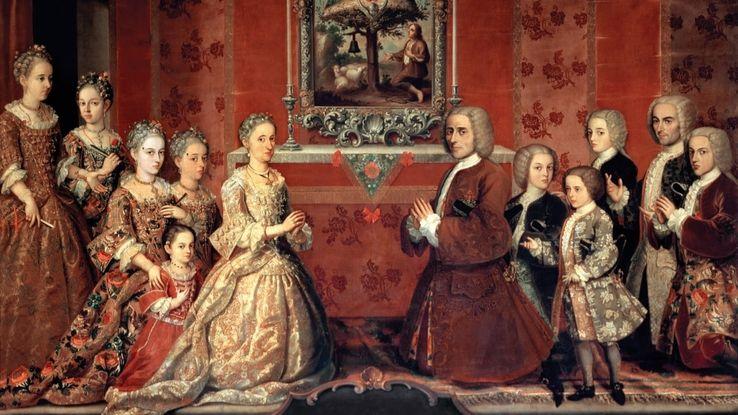
The wealthy could also afford medical care, while the poor oft had to deal with medical problems on their own. Despite these socioeconomic differences, the wealthy died merely as often as the poor during the Blackness Plague. The disease quickly took lives in both rural areas and urban centers.
People Left Their Families to Die
Of all the trauma associated with the Blackness Plague, the largest toll was taken on the mental health of survivors. The Black Plague was and then terrifying and deadly that information technology caused people to break their moral, social and familial ties in ways they never thought they would.
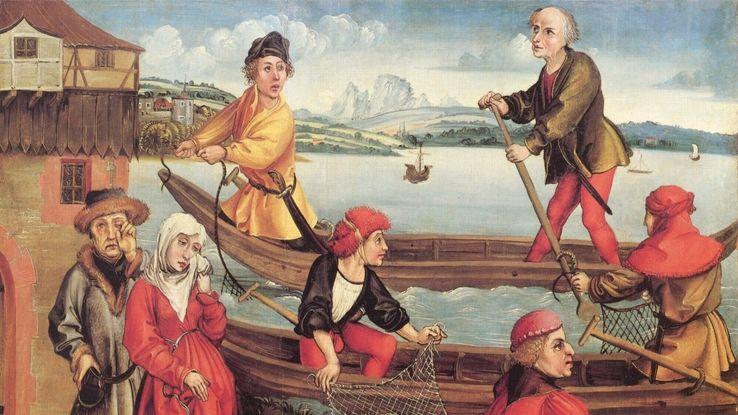
In medieval social club, the family was extremely important, but beginning-person accounts show that some people left their love family members to die alone rather than risk contracting the bubonic plague themselves. In some cities, doctors and clergymen, who were looked to for leadership and help, abased their posts. People who stayed to help their family unit members ordinarily ended up dying themselves after witnessing the painful deaths of their family members.
The Average Lifespan Increased
Although the Black Plague decreased the population, information technology inadvertently increased the lifespan of survivors. The Medieval time period is known for early deaths and squalid living conditions. Considering there were much fewer people left live after the epidemic, wages increased, and nutrient and housing were plentiful.

For one of the first times in several centuries, the generation of people that survived the plague started to alive by their heart ages. More people had adequate shelter and plenty of food, including meat, to eat on a daily ground, and so they lived longer. Current generations are still benefitting genetically from the uptick in overall health and lifespan during this time period.
Detailed Beefcake Textbooks Were Written
Dissection of deceased humans was very controversial earlier the plague. Religious beliefs promoted the idea that a person'due south afterlife could exist compromised if their torso wasn't handled properly. Pope Boniface 8 banned cadaver dissections, which fabricated it illegal in most of Europe.
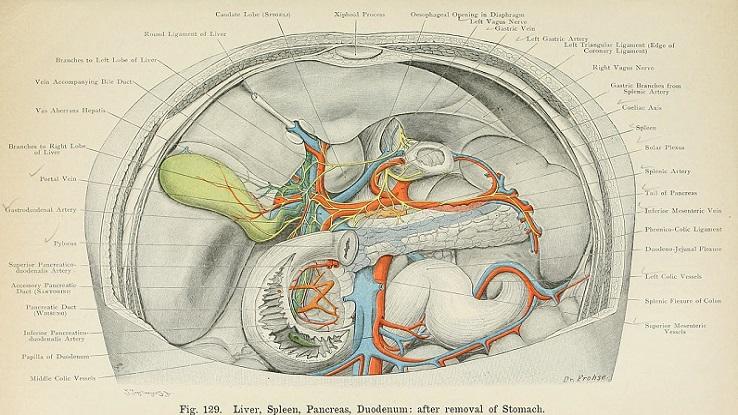
During the Black Death, Pope Clement 6 made it legal to dissect human bodies. He hoped that studying the bodies would help doctors detect a cure for the plague. Additionally, many of the religious customs surrounding decease had already been abandoned because there weren't enough priests to bargain with the mass deaths. The noesis of human anatomy discovered during this fourth dimension laid the cornerstone for the noesis available today.
Fewer Saints Were Recognized
The Catholic Church building had a huge effect on constabulary, life and religion during the time of the Black Plague. Today, people who take a big social or scientific impact receive Nobel Prizes, but in the Middle Ages, people were given sainthood for incredible achievements.
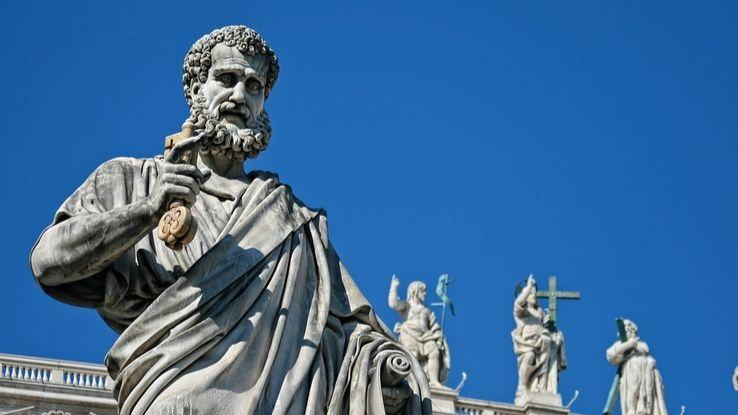
During the plague, very few new saints were introduced. For 1 thing, Pope Cloudless 6 is well known for completely secluding himself for a lengthy menses of quarantine and prayer to avoid catching the bubonic plague himself. The appointment of new saints was a very regular and important part of life at the time, but it all only stopped while the plague tore through Europe.
Unfinished Buildings Still Exist
Society was humming, growing and starting to look promising (historically speaking) just before the Blackness Death devastated Europe. Society was still highly focused on agriculture, but new practices and inventions were making life easier. Literature, education, civilization and art had all started to aggrandize exponentially.

Information technology all came to a screeching halt because people were either dead or trying to keep themselves from dying. The Duomo di Siena, or Siena Cathedral, in Italy has an unfinished addition to the cathedral that greatly exemplifies the impact of the bubonic plague on expression. Construction stopped when most of the workers died and was never resumed. Today, the unfinished architectural gem is a popular tourist destination.
Music Almost Stopped
Although such intricate details of ancient life are difficult to corroborate from the scant historical documents that are available, at that place is a supported conventionalities that the overall growth of music was stunted by the Black Plague. Songs during this night period of human history were extremely dismal.

Instead of the dizzy and jovial music that was popular before the plague, music became somber and ho-hum. In many places, information technology nearly became extinct. The ability to sing and play music were skills that many people didn't have, so when the bubonic plague claimed so many lives, information technology besides wiped out generations' worth of musical talent.
Launch of a Mini Inquisition
Tragedies often bring out the worst in people. Very fiddling was known nearly contagious diseases at the time, and people in many towns and villages were eager to blame someone or something for the Black Death. Some people were then determined that Jews were to arraign that Inquisition-similar weather began to exist in parts of Europe.
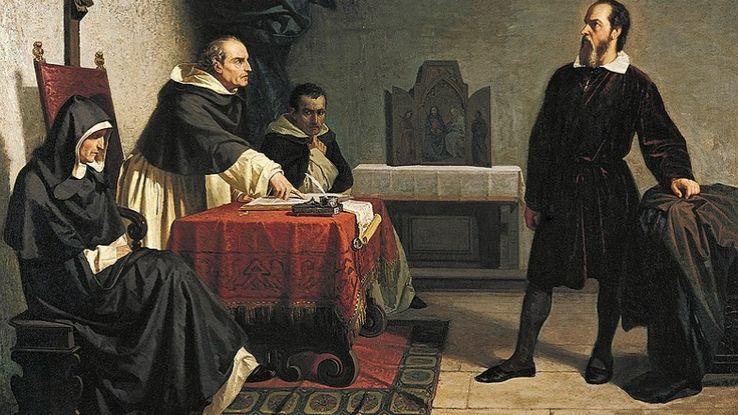
An ugly rumor spread that Jews had intentionally caused the disease, and Jewish people were rounded up and tortured into making false confessions almost causing the plague. Under extreme duress, many of them "admitted" to poisoning local bodies of water with some fake substance that caused the plague. After such admissions, they were viciously killed anyhow.
Fragrances Blossomed to Cover the Stench
The Black Plague gave the cologne and perfume industries a big boost. Some doctors even spread the idea that odors could keep the plague away. For this reason, taking a bath — already not a mutual daily practice — was seen every bit a mode of making yourself susceptible to the plague, which fabricated bathing even less common.

Although some medico's too spread the idea that natural fragrances, such equally herbs and flowers, helped spread the plague, there were other doctors who taught that good smells could fight the plague. Due to the overwhelming stench of expiry and the idea that good smells could assist, perfumes and colognes became pop. Some people fifty-fifty filled their pockets with flowers.
Wool Shortages Lasted for Decades
The Black Plague was fifty-fifty more deadly for animals than it was for humans. Humans of that time period didn't follow modernistic standards of cleanliness, so you tin just imagine how dirty the conditions were for animals. Bites from fleas and rats were two ways the plague was spread, and the animals were typically riddled with fleas.

And then many sheep died equally a result of the Black Plague that at that place was a wool shortage throughout Europe. It took decades for the sheep population in Europe to grow dorsum to a level where enough wool could be harvested to back up the human population.
The Birth of Reliable Science
Prior to the Black Expiry, alchemy was thought to be a legitimate science. Many people believed in magic and believed that all bad things happened as a result of God's aversion. None of those ideas worked to stop the plague from spreading.
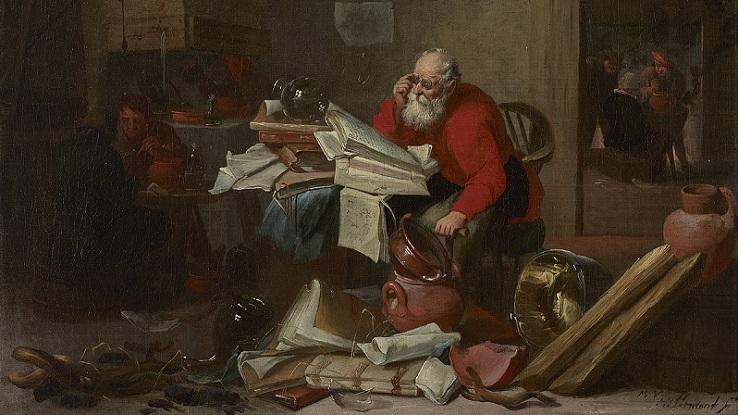
Although things happened gradually over time, the plague helped construction science as we know information technology today. Scientific communities began to claiming each other to testify their ideas, and the scientific method eventually gained popularity. People wanted answers, and they were adamant to find them in ways that could exist proven. Due to these early on scientific advancements, effective handling for the Black Death was discovered centuries afterwards.
Religion Became More Personal
Prior to the Black Plague, religion was very austere. God was idea of as harsh and just interested in crime and penalization. Many plague survivors blamed God and religion for all the suffering they had witnessed, but it spurred some people to inquire questions about faith.

Many non-Cosmic religious movements were born as a result of the plague. The Bible was translated into common languages, and the friendlier side of God's personality was explored. The idea that God helps people through trials and tribulations, rather than always causing them, became pop. Some of the religions and religious ideas that appeared in the post-plague catamenia are all the same around today.
More than People Starved Than Ever Before
For one of the first times in history, public health initiatives started to happen as a result of the plague. Quarantines, travel bans and restrictions on trade were just a few of the measures that kings, local leaders and clergymen implemented to protect their cities from the Black Death.

People were usually fined for not complying with these rules. In many cases, it was beyond the ability of the government who imposed the rules to enforce them. At other times, the rules only led to nutrient shortages and hunger, which fabricated people weaker and more susceptible to the plague.
Riots Took Identify All Over Europe
Later the Black Plague, the social hierarchy was turned on its caput. Previously poor people could beget land and housing, due to a shortage of workers assuasive them to need college wages. Rich people often couldn't afford to continue their many acres of land because they didn't take enough living workers to cultivate it all.
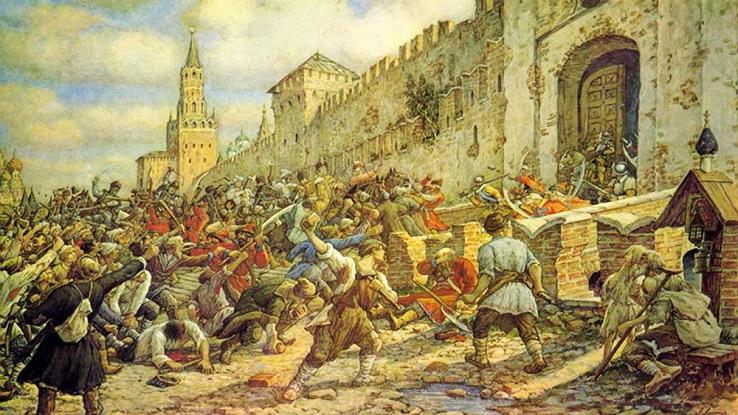
But every bit the poor were rising in economic status, lawmakers started to introduce laws that capped wages. These laws resulted in a lot of tension between the rich and the rise poor, and in that location were riots in some European cities. Most of the socioeconomic riots happened in England.
An Unexpected Heave to the Environment
Prior to the Black Death, European economies and populations were both booming. Trade ships couldn't be built fast plenty, and huge amounts of lumber were needed for new buildings. Deforestation in Frg and some parts of the Mediterranean region had already been happening for hundreds of years.

Due to the lack of surviving workers and travel and trade restrictions, the plague temporarily paused many of the previously humming businesses. This gave the forests enough time to offset growing back. Who knows how bad the electric current ecosystems of Europe would be if the rampant deforestation had connected unchecked?
Women Were Banished in Some African Towns
Christianity wasn't the only faith that believed the Black Plague was a punishment from God. Due to Africa's close proximity to Europe, the plague besides afflicted Northern Africa. In Cairo, Egyptian women were blamed and persecuted for the plague, only equally Jews were in Europe.

One religious leader of the fourth dimension spread the idea that Allah was punishing the people for sexual sins. Women in some towns were essentially banished from society because people believed more than sins would take identify if they were allowed to associate with men. This shows how much of an impact the Blackness Plague had on worldwide culture.
Wars Stopped (Temporarily)
The Blackness Death happened right in the middle of the Hundred Years State of war between French republic and England. Both countries were seriously impacted by the disease, and they were forced to finish the bitter boxing for 6 years. Neither country had plenty soldiers, weapons or coin to continue up the fight.
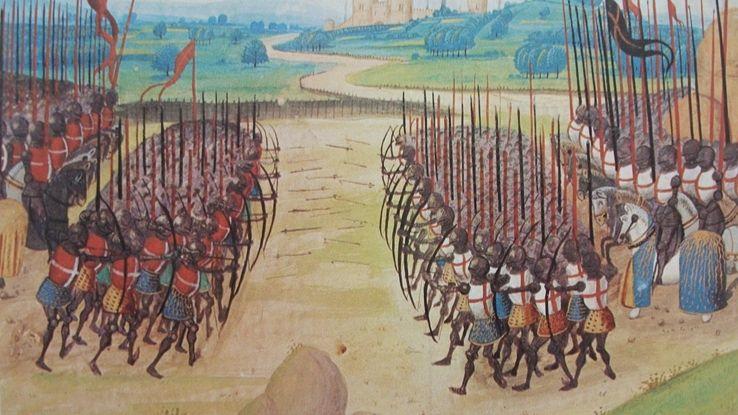
A few years after the epidemic stopped (the plague continued in Europe for several centuries on a smaller calibration), the incredibly long state of war started again. Although the plague killed millions itself, it probably saved some lives due to the armistice.
People Grew Stronger as a Whole
The Black Death killed well-nigh of the people it infected, and information technology was extremely contagious. People who didn't contract information technology, despite the extremely poor infection control measures at the time, had extremely strong immune systems. People who were old, ill, malnourished, very young and had weakened immune systems died from the plague at college rates than healthier people.

The plague essentially left behind a group of people with very strong allowed systems, and those are the people who populated the globe for future generations. Humans today have improve immunity to sure diseases because they are descendants of Blackness Death survivors.
darbyfecloseraves76.blogspot.com
Source: https://www.simpli.com/history/strange-consequences-black-death?utm_content=params%3Ao%3D740008%26ad%3DdirN%26qo%3DserpIndex
0 Response to "If You Give Black Panther a Bad Review Your Racist"
Post a Comment